
Necris Immortarium
Contents
About
The Necris Immortarium is a vast necromantic empire built around a simple social contract: you are allowed to live in bliss now because, when you die, your service to the Empire begins.
Citizens of the Immortarium generally enjoy a high standard of living. Its core worlds are wealthy, orderly, technologically advanced, and often extremely comfortable. Food, entertainment, education, medicine, housing, and leisure are widely available, and the Empire actively encourages its living population to enjoy the time they have.
That comfort is possible because much of the labor that would normally sustain a civilization is performed by the dead.
Every citizen accepts a magical Pledge as part of citizenship. When they eventually die, that pledge allows the Empire to restore them as one of its undead servants, known broadly as Pledge Walkers. These undead maintain infrastructure, staff military forces, perform dangerous labor, administer distant territories, and carry much of the burden that allows the living population to enjoy a relatively luxurious existence.
Pledge Binding
The Immortarium is built around a form of necromantic law called Pledge Binding.
A Pledge is not simply a contract written on paper. It is magically embedded into the soul through rituals and displayed on the body through tattoos. This is performed by living specialists known as Pledge Forgers, traditionally associated with the Ordo Pactificum.
Once accepted, in death, deliberately violating a Pledge causes overwhelming spiritual pain.
The basic citizenship pledge guarantees that after death, a citizen's body and soul can be placed into imperial service. More advanced Pledges can offer greater independence, authority, wealth, privileges, or a more comfortable existence after death in exchange for greater responsibilities during life.
Life and Death in the Empire
The Immortarium draws an unusually firm distinction between the living Empire and the dead Empire.
The living are encouraged to raise families, work when necessary, pursue education, create art, attend festivals, travel within imperial territory, and generally enjoy themselves.
The dead work.
Lower-ranking Pledge Walkers may have very little independence at all, performing repetitive labor or serving in enormous military formations. Higher-ranking undead retain increasingly more of their personality, autonomy, and authority.
At sufficiently high levels, death can actually become the beginning of a second career.
That creates an unusual culture where people may speak about their eventual death with the same kind of practical anxiety someone elsewhere might have about retirement.
"I really should improve my Pledge before I die."
"I've been saying that for thirty years."
Government
The Immortarium is nominally ruled by an ancient lich known as the Immortarch, the founder of the modern imperial system.
Day to day rule is divided between two enormous branches of government.
The Curia Vitae, the Court of Life, is primarily run by the living. It oversees civilian government, prosperity, public services, internal law, Pledge records, religion, and the quality of life of imperial citizens.
The Praesidium Mortis, the Guard of Death, is largely controlled by the undead. It manages the military, expeditions, border Baronies, foreign affairs, and much of the Empire's expansion beyond its inner worlds.
The Three Great Arch-Barons
Three of the most famous figures in imperial history are ancient Tier V liches who helped shape the modern Immortarium. They also rule some of the outer sectors of the Immortarium otherwise known as the Baronies
Arthos Negotium is associated with industry, commerce, consumer goods, and enormous corporate interests. His enterprises help provide many of the conveniences that make imperial life so comfortable.
Porthos Praedicare is the Empire's great evangelist and public religious figure. He is energetic, charismatic, fond of enormous celebrations, and frequently presents the Immortarium less as a grim necromantic state and more as proof that death does not have to end a good life.
Aramis Bellum is one of the Immortarium's most famous military commanders and the traditional face of its war fleets.
Ranks of the Dead
The Empire broadly recognizes five major levels of postmortem service.
Tier I, Servitus Mortis, are the great mass of imperial undead laborers. They perform simple work, maintain infrastructure, and form much of the basic military manpower of the Empire.
Tier II, Animus Retentus, retain more of their mind and can perform independent assignments.
Tier III, Ordo Praefectus, are the first true command rank. These undead can lead others, receive greater independence, and are generally permitted to maintain relationships with their families.
Tier IV, Ordo Legatus, are major military, administrative, religious, and political leaders. Reaching this level is a major public achievement.
Tier V, Ascensio Immortalis, are the great lich-lords of the Empire. These individuals possess enormous autonomy and frequently govern distant territories on behalf of the Immortarium.
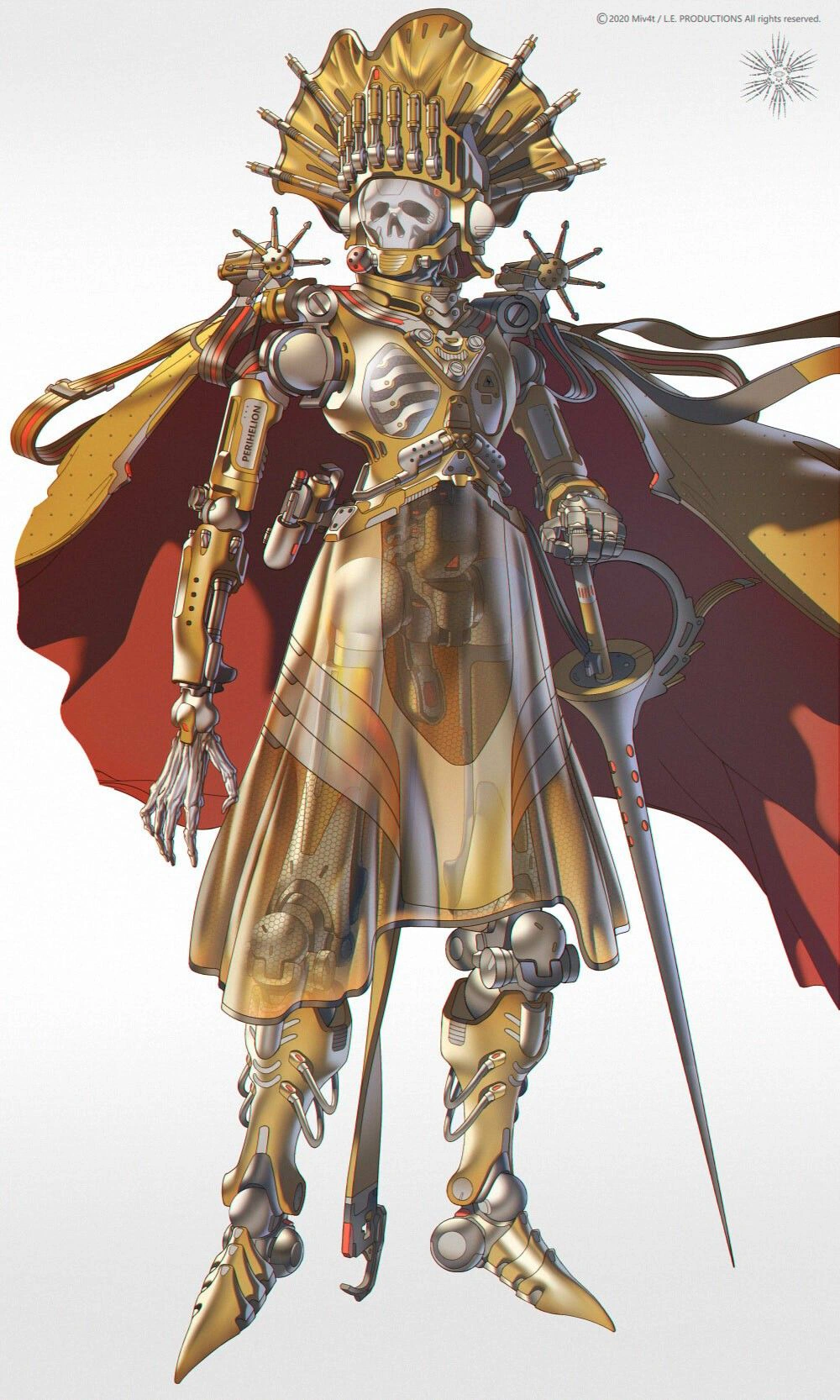
Common Ancestries
Human, Kasatha, Madeosarai, Sarcesian, Contemplitive, Undead.
Touchstones
Ancient Rome, The Necrons from Warhammer, Wall-E, The Three Musketeers, and Soul Eater.